
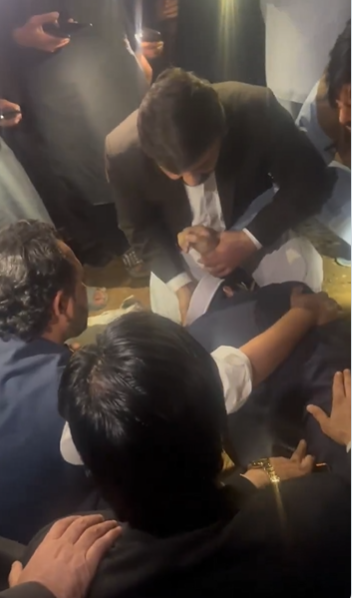
The human cost of political crackdowns in Pakistan continues to deepen, as another tragic chapter unfolds in the aftermath of the May 9 cases. A young political worker, Sohrab Khan associated with Imran Khan has become a symbol of systemic injustice and the erosion of basic rights.
Sohrab Khan was detained in connection with the May 9 unrest, a series of events that remain highly contested. These cases were built on a “false flag operation,” where the innocent political workers were swept up in a sweeping crackdown designed to silence dissent.
What makes Sohrab’s case especially harrowing is not only the question of guilt or innocence, but the process itself. He was tried in a military court an extraordinary measure that has drawn widespread criticism from human rights advocates. Such courts operate outside the civilian judicial system, often with limited transparency. In Sohrab’s case, his right to a fair trial and appeal is said to have been severely restricted, raising serious concerns about due process.
But beyond the legal arguments lies a deeply personal tragedy.
While Sohrab remained imprisoned, his mother passed away. He was denied the chance to see her one last time. Denied the chance to grieve beside her in her final moments. Denied the most basic human closure.
Reports describe him breaking down in tears at her grave an image that has stirred outrage and sorrow among supporters and rights activists alike. For many, this is no longer just about politics; it is about humanity.
This case reflects a broader pattern: the use of extraordinary legal mechanisms to suppress political opposition, the sidelining of civilian courts, and the emotional and psychological toll inflicted on detainees and their families. They warn that when justice is perceived as selective or denied altogether, it doesn’t just punish individuals it erodes public trust in the system itself.
Neutral observers, questions persist: Can justice delivered without transparency truly be called justice? And at what point does enforcement cross into repression?
Sohrab Khan’s story now stands as a stark reminder of what is at stake not just legal principles, but human dignity. A son who could not bid farewell to his mother. A family fractured. A nation still grappling with the line between security and rights.
What they did to Imran Khan & his workers can't be forgiven!
— FawadAzizKtk (@ImFawadKtk) March 7, 2026
Sohrab Khan, a Imran Khan's worker sentenced in 9th May case by military courts, today his mother passed away.
He didn't see his mother & crying on his graveyard. 💔🥺pic.twitter.com/JHcaRY6zRl